

The baby shower is a distant memory. The nursery, once a Pinterest-perfect sanctuary of sage green and wicker baskets, is now a staging ground for diapers and burp cloths. You’ve prepared for the birth—the breathing techniques, the hospital bag, the birth plan—but as you sit on your bed three days after coming home, wearing a mesh diaper and wondering why no one told you that your own body would feel like a construction site, a realization hits: we spend nine months preparing for a birth, and about nine minutes preparing for what happens to the woman after the birth.
The “Fourth Trimester” is a term that has gained popularity recently, and for good reason. It acknowledges that the three months following childbirth are just as critical, transformational, and intense as the three trimesters that preceded it. But postpartum care isn’t just a medical recovery period; it’s a total identity shift.
If you’re reading this while pregnant, or perhaps while rocking a newborn with one hand and scrolling with the other, here is the unfiltered, “no-gatekeeping” guide to surviving and thriving when the world’s focus shifts from your bump to your baby.
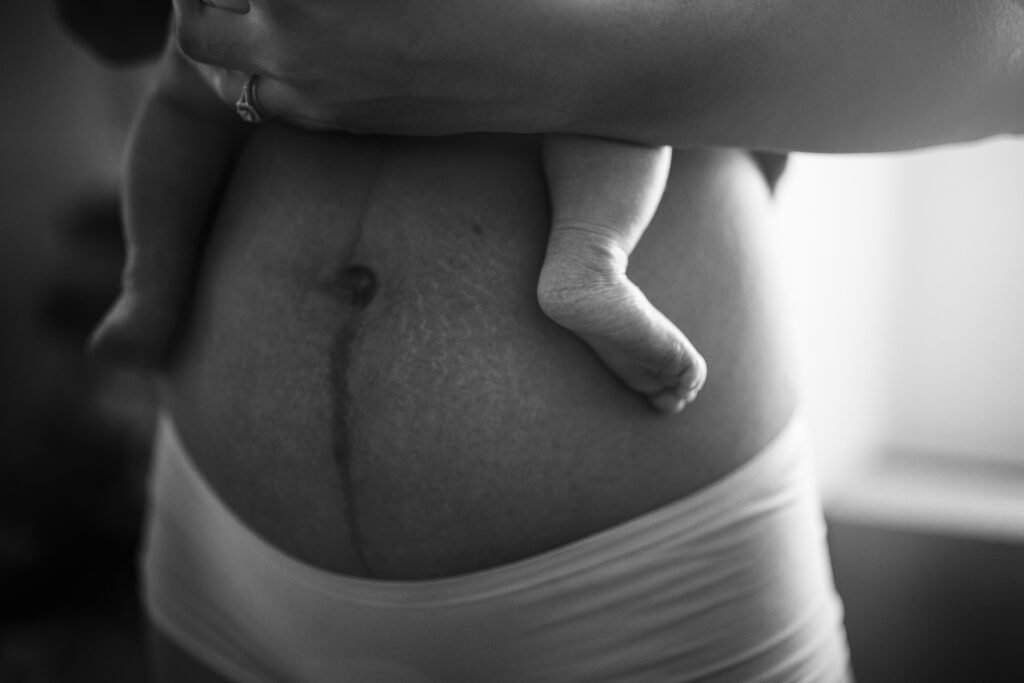
The Physical Reality: Your Body as a Construction Zone
Society likes to use the word “recovery,” as if you’re just getting over a mild flu or a sprained ankle. In reality, your body has just performed a feat equivalent to running several marathons back-to-back while your internal organs were being rearranged.
The “After-Pains” No One Mentions
Everyone talks about the contractions during labor, the “peak” of the mountain. Very few mention the descent. Your uterus, which stretched to the size of a large watermelon, has to shrink back to the size of a pear. This process, known as involution, causes “after-pains.”
If you are breastfeeding, these pains often intensify. Why? Because the oxytocin released during let-down also signals your uterus to contract. It’s a brilliant design of nature to prevent postpartum hemorrhage, but in the moment, it feels like a cruel joke.
- Pro Tip: Keep a heating pad on your nightstand. Use it on your lower abdomen during nursing sessions to dull the ache.
The “First Trip” and the Bathroom Strategy
Let’s be real—the first trip to the bathroom after delivery is a psychological hurdle. Whether you had a vaginal birth or a C-section, the “plumbing” feels entirely different.
- The Peri Bottle is Your Best Friend: Forget toilet paper. For the first two weeks, it is your enemy. Use warm water to cleanse and pat dry with the softest cloth you own.
- The Fear of the “First Poop”: It’s a common fear among new moms. The key is proactive management. Do not skip the stool softeners. Stay hydrated, eat fiber-rich foods, and remember: breathe through it just like you did during labor.
2. The Hormone Crash: Navigating the Emotional Cliff
Around day three to five, your estrogen and progesterone levels drop faster than a lead weight. This isn’t just “being a little tired.” It is a physiological cliff that affects your brain chemistry.
The “Baby Blues” vs. Reality
I remember crying for forty-five minutes because my husband bought the “wrong” type of crackers. Not a quiet sob, but a soul-shaking wail that made me feel like the world was ending. If you find yourself weeping over a commercial or feeling an overwhelming sense of “What have I done?”, know that it is the hormones talking.
However, we need to talk about the difference between the blues and something deeper. If that heavy cloud doesn’t lift after two or three weeks, or if you feel a sense of detachment, hopelessness, or intrusive, scary thoughts, please reach out to a professional. Postpartum Depression (PPD) and Postpartum Anxiety (PPA) are not signs of weakness; they are medical conditions fueled by that hormonal drop. Asking for help is the most “expert” parenting move you can make.

3. The Myth of “Bouncing Back”
The phrase “bouncing back” should be officially retired from the English language. You aren’t a rubber band; you’re a human being who grew an entire skeletal system, a nervous system, and a new organ (the placenta) inside your torso.
Embracing the “New” You
Your skin might be loose, your hips might be wider, and you might have stretch marks that look like a map of a city you’ve never visited. It’s incredibly tempting to look in the mirror and mourn your “old” self. But try to look at your body with the same awe you look at your baby. That body was the first home your child ever knew.
Healing takes time. The “six-week checkup” is often touted as the moment you are “cleared” for everything—exercise, intimacy, normal life. But for many women, six weeks is just the beginning. Pelvic floor therapy is something I wish every woman had access to. It’s not just about “doing your Kegels”; it’s about retraining your core and floor to work together again. If you feel “heaviness” or pain, don’t ignore it.
4. Setting Boundaries: You Are a Patient, Not a Hostess
When the baby arrives, the world wants to knock on your door. While their intentions are usually rooted in love, your home is currently a recovery ward and a high-intensity learning center. It is not a tea room.
- The “Entry Fee” Rule: If someone wants to see the baby, they should contribute to the household. This isn’t being mean; it’s being practical. They can bring a hot meal, fold a load of laundry, or take the dog for a walk. If they expect to be served coffee while you hold a crying newborn, they can wait until month three.
- The “Pajama Rule”: A veteran midwife once told me: “If you stay in your pajamas, people remember you’re recovering. If you get dressed and put on makeup, they expect you to host.” Stay in your robe. It’s a visual cue that you are still in healing mode.
- The 5-3-3 Rule: 5 days in the bed, 3 days on the bed, and 3 days around the bed. In our “hustle culture,” we feel guilty for resting. But resting early prevents long-term complications and helps your milk supply stabilize.
5. Nutrition: Fueling the Reconstruction
You are likely depleted of iron, calcium, and sleep. Now is the absolute worst time for a restrictive diet. Your body needs calories to heal tissues and, if you’re nursing, to produce the “liquid gold” your baby needs.
The Power of Warmth
In many traditional cultures—from China to Mexico—the “Golden Month” involves eating only warm, easy-to-digest foods. There is wisdom in this. Cold salads and raw veggies can be hard on a sluggish postpartum digestive system. Think bone broths, stews, oatmeal with flaxseeds, and warm lentil soups.
Hydration Beyond the Basics
You will feel a thirst like you’re wandering the Sahara, especially the moment the baby latches.
- The Water Bottle Rule: Get a massive, insulated water bottle with a straw (easier to drink one-handed).
- Electrolytes: Sometimes plain water isn’t enough. Coconut water or electrolyte tabs can help replenish what you lose through night sweats (yes, the night sweats are real and they are intense).

6. The Identity Shift: The Birth of a Mother
Perhaps the most underestimated part of postpartum care is the mental transition, often called matrescence. Just as a teenager goes through adolescence, a woman goes through matrescence.
One day you were an independent person who could go to the store on a whim; the next, your entire existence is tethered to the needs of a tiny, demanding, and utterly beautiful human. It is normal to miss your old life. It is normal to feel lonely, even when you’re never alone.
Finding “micro-moments” of your old self is vital for your mental health. It might be:
- A 10-minute hot shower where you actually use the “fancy” soap.
- A podcast that has absolutely nothing to do with parenting or sleep cycles.
- A cup of coffee enjoyed while it’s actually hot (a rare luxury!).
7. The Logistics: What Your Survival Kit Actually Needs
Forget the wipes warmer and the designer diaper bags for a second. Let’s talk about the gear that actually saves your sanity during those first 30 days.
- High-waisted, dark underwear: Don’t ruin your favorites. Buy a pack of “ugly” cotton briefs that sit above a potential C-section incision.
- Silverettes or Nipple Shields: If you are breastfeeding, nipple trauma can happen fast. Silverettes (small silver cups) have natural antibacterial properties and are a lifesaver for healing.
- A Long Charging Cable: You will find yourself “nap-trapped” more often than you think. Make sure you can reach your phone or tablet without waking the baby.
- The “Basket System”: Have a small basket in the living room and one by your bed. Fill them with snacks (protein bars, nuts), water, burp cloths, and spare nursing pads. You shouldn’t have to get up every time you realize you forgot something.

8. Partner Support: It’s a Team Sport
If you have a partner, this is the time for clear, radical communication. They cannot read your mind, especially when you are both operating on four hours of broken sleep.
Instead of saying “I need help,” try to give specific tasks:
- “Can you please make sure my water bottle is full before you go to bed?”
- “Can you take the baby for a walk for 30 minutes so I can nap without hearing the monitor?”
- “I need you to handle the diaper changes from 8 PM to midnight.”
Sharing the load isn’t just about the baby; it’s about your partner taking care of you so you can take care of the baby.
The Days are Long, but the Years are Short
There is an immense amount of pressure to be the “perfect” mom who handles everything with a serene smile and a clean house. Let go of that. Success in the postpartum period isn’t a tidy living room; it’s a fed baby and a mother who feels seen, supported, and safe.
Some days will feel like a blurry, tear-stained marathon. You will lose track of what day it is, and you will likely wear the same shirt for 48 hours. But in between the exhaustion, there are the quiet moments—the way the baby smells, the tiny sigh they make in their sleep, the realization of your own incredible strength.
You cannot pour from an empty cup. Taking care of yourself isn’t a luxury; it’s a prerequisite for motherhood. Give yourself the grace you so freely give to everyone else. You are doing a hard thing, and you are doing it beautifully.
Welcome to the club. It’s messy, it’s loud, and it’s the most profound journey you’ll ever take.